

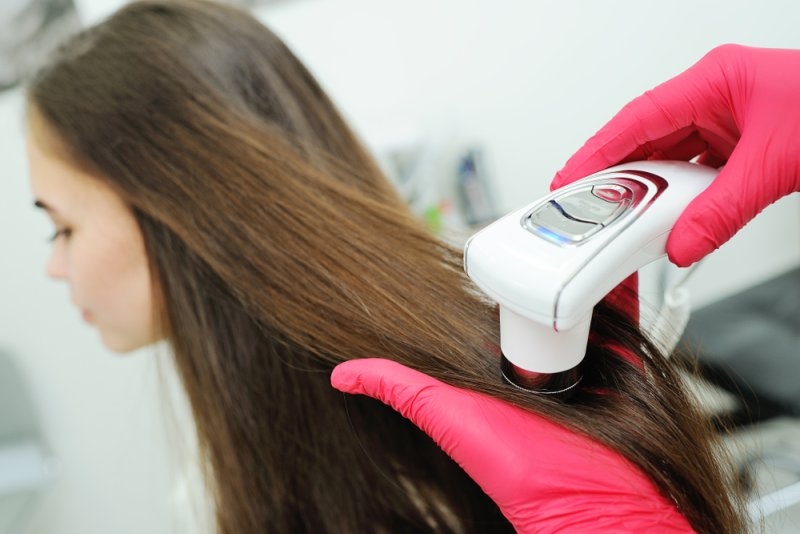
If your hair still appears dry after conditioning, or feels heavy when you apply any moisture-rich product, it could be more than just your shampoo or hair type. This is due to hair porosity affecting the penetration and retention of water in your hair. Knowing about it can help you steer clear of products that leave your hair looking greasy or rough. With some simple experiments and tests for hair porosity, you will get started with your hair care routine.
Porosity is the measure of how easily the hair shaft can absorb and retain water. The outermost layer is the cuticle, and it is made up of overlapping scales. Tight overlapping scales will slow down moisture absorption, but if they are raised or damaged, then moisture will easily get into the hair shaft.
Porosity is not related to hair density, thickness, or the curl pattern of hair. Any type of hair can be low or highly porous. Genetics influence porosity, but other factors include styling heat, bleaching, chemical processing, and friction, among others. Older ends of the hair and the roots can also vary in porosity.
There are basically three types: low porosity, moderate porosity, and highly porous hair. Moderate porosity will allow moisture entry and retention easily.
Also Read: Best Dry Hair Remedies For Smooth And Moisturized Strands
No at-home method measures porosity perfectly. Use several checks and look for a consistent pattern.
The float test is a common hair porosity test done in the comfort of your home, although other factors such as oil, residues, air pockets, and strand thickness may skew the results.
Wash a single strand without the use of any products or conditioner and allow it to dry. Immerse the strand in room temperature water for a few minutes. A strand that floats on the water’s surface suggests low porosity, a strand that sinks gradually suggests moderate porosity, and a strand that sinks fast suggests high porosity. Consider this an indicator rather than a confirmation.
Take note of how your hair acts when you are in the shower. Low porosity hair will probably take some time to get completely wet, whereas high porosity hair will readily soak up water.
A longer drying time may indicate low porosity, but length of hair, density, and humidity levels also play their part in determining porosity. Waxy or heavy products on hair may indicate build-up. Hair with high porosity may feel smooth when conditioned, but turn out to be dry and frizzy shortly thereafter.
Feel the strand of hair gently with your fingertips. If it feels smooth, then it may indicate a flat cuticle layer, and rough-feeling hair indicates a more porous hair strand.
Differentiating between low, medium, and high porosity hair is easier when you understand the symptoms.
| Type of Porosity | Characteristic Symptoms | Primary Treatment Focus |
| Low porosity | Difficult to moisturize; may cause product buildup and difficult drying | Apply light products and remove buildup |
| Medium porosity | Easily moisturized; typically retains moisture | Keep balanced and minimize damage |
| High porosity | Quickly absorbs moisture; can dry quickly, frizz, and break easily | Proper conditioning and avoiding moisture loss and damage |
These are clues, not strict rules. Roots and chemically treated or weathered ends may show different characteristics.
In case of a low porosity hair care regime, the main idea is to moisturize without coating the hair. More products do not necessarily mean better results. A light formula might be more efficient.
Choose a mild shampoo to wash away the oils and product build-up. If your hair is feeling too coated, consider using a clarifying shampoo sometimes, but use it according to the directions to prevent drying out your hair.
Condition your hair when wet, paying attention to where there are tangles. Lukewarm water will help with saturation of the strands. When using deep conditioners, you should follow the instructions. Gently warming your hair under a shower cap might be helpful sometimes, but you need to be careful with the temperature.
Consider light water-based leave-ins or sprays rather than cream and butters. Start with small amounts. Oil might help smooth out your hair tips, but it does not serve as conditioning.
Porosity hair care involves efforts to make the hair softer, more resistant to breakage, and less prone to water evaporation. A rinse-out and a leave-in conditioner will be helpful, especially for dry and chemically treated hair.
Choose a moisturizer that also smooths. Conditioning, fatty alcohols, and some oils or butters will reduce the amount of friction. Light leave-ins are good for fine hair, and heavier creams will be better suited to thicker or coily hair.
Treat wet hair gently, combing it out with a wide-tooth comb or a brush, starting at the ends. Avoid high temperatures when styling the hair, and apply heat protectants according to instructions. Split ends should be trimmed off, especially if the hair was weakened during color or bleach processes.
Hair protein treatments can sometimes enhance the feel of damaged hair; however, their excessive use will result in stiffness. If this is the case, suspend protein treatments and go back to normal conditioning.
There is no need to purchase expensive or specialized porosity types of products to get the best effect. Concentrate on effectiveness. Light shampoos, liquid conditioners, water-based leave-in treatments, and occasional clarifying products could be your first steps.
In case your hair feels oily and heavy, do not apply multiple layers of masks, oils, and styling products. Do not think that you have to give up rich products; you can use some amount of them on the ends of your hair. The scalp and the lengths of your hair could require different treatment; use shampoo and conditioner based on the oiliness and sweating, dryness, and tangling of your hair. Consult a dermatologist in case of itching, scaliness, falling out, and breakage.
You may also like: Ancient Mexican Onion Rosemary Tonic for Luscious Hair Growth
Porosity testing on hair is a good beginning in determining the behavior of your hair towards moisture and products; however, one cannot determine their porosity just by doing the float test alone. It is important to observe their wetting, product buildup, and duration of conditioning. Small adjustments include the use of lighter formulas for low porosity and conditioning for high porosity.
The float test should not be relied upon exclusively, since the presence of residue, oils, air bubbles, or particular strands can affect whether or not your hair will sink or float. You can use the float test along with other hair porosity tests.
Yes. Genetics are responsible for the natural porosity of your hair; however, bleaching, coloring, heat styling, mechanical damage, friction, among others, may affect the cuticle. Roots and ends may act differently as well since the ends have had more exposure to damage.
No. Hair porosity tells us how permeable your hair is; it does not tell you anything about its health status. In some cases, low porosity hair may be hard to wet and prone to buildup, whereas high porosity hair needs more conditioning.
There is no universal schedule. Clarify when hair feels coated, dull, or weighed down despite normal washing, and follow the shampoo’s directions. If your hair becomes dry or rough afterward, clarify less often and use a suitable conditioner to restore manageability.
One common mistake is focusing only on adding moisture while continuing habits that damage the cuticle, such as frequent high heat or aggressive detangling. Pair conditioning with gentle handling, heat protection, and reduced chemical stress to help limit breakage and improve the feel of the hair.
This content was created by AI