

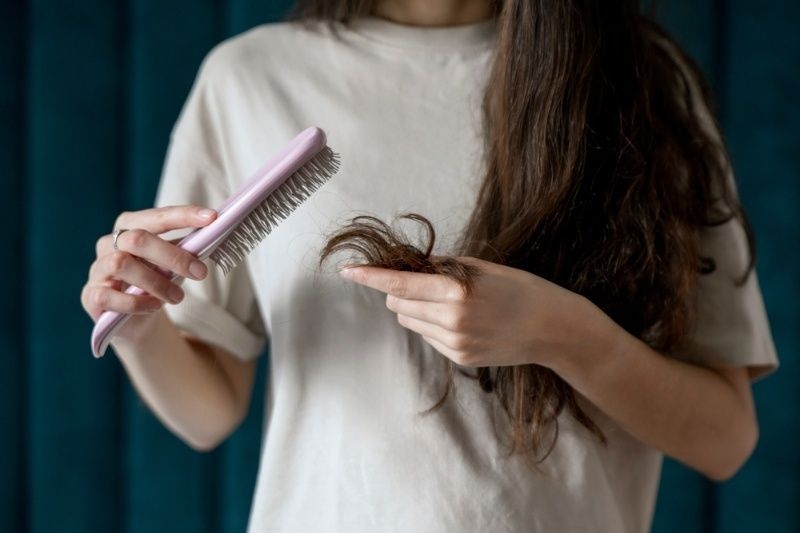
Picture this: you spend twenty minutes on your hair, walk out the front door, and the humidity destroys everything before you even reach your car. Sound familiar? Across the US, from Houston summers to New York springs, frizzy hair is a near-universal frustration. And while most people assume frizzy hair causes are limited to bad weather, the reality is more layered than that. The good news is that real, practical frizzy hair remedies exist for every hair type. Whether heat tools are part of your daily routine or nowhere near it, this guide walks you through exactly what is happening to your strands, what fixes it at home, and how to control frizzy hair with daily habits that actually hold up over time.
Understanding frizzy hair causes is honestly the first step toward fixing the problem for good. Your hair's outer layer is made up of tiny overlapping scales. When your hair holds enough moisture, those scales stay flat, and your hair looks smooth. Dry hair is a different story. The scales lift, and the strand starts pulling moisture out of the surrounding air. That absorbed moisture causes each strand to swell unevenly, and that uneven swelling is what you see as frizz.
Common frizzy hair causes go well beyond the weather. Shampoos with harsh cleansers strip your scalp's natural oils. Alcohol-based gels and styling products dry the strands from the outside. Rough terrycloth towels physically rough up the cuticle every wash day. Heat tools, used frequently without protection, wear down the hair's outer layer over time. Color-treated and chemically processed hair tends to be more porous, so it absorbs humidity faster than untreated hair does.
You may like: How to Use Mexican Saltwater Hair Spray for Big Hair Volume?
A lot of the most effective frizzy hair remedies require nothing more than a trip to your pantry.
Going heat-free is not just a trend. It is one of the most effective long-term approaches, especially for frizz control for curly hair and wavy textures that already run dry.
On humid days, one of the easiest humidity-proof hair tips is simply keeping your hair up. A loose braid or silk scarf limits how much surface area is exposed to the air throughout the day.
You do not have to choose between heat tools and healthy hair. The difference is in how you use them. A heat protectant is the first thing that goes on your hair, every single time, before any tool touches it. That one step alone changes how much damage builds up over months of regular styling.
Knowing how to control frizzy hair long-term really comes down to repetition and consistency. Shampoo two to three times a week at most so your scalp holds onto its natural oils. Use a deep conditioning mask weekly as a regular step, not just an occasional treat. Trim every six to eight weeks. Split ends travel up the shaft and add to the frizzy appearance, even when the rest of your hair is well moisturized.
When shopping for the best anti-frizz products, read ingredient labels before you buy. Look for glycerin, natural oils, and aloe vera near the top of the list. Skip anything with alcohol listed early in the formula. For frizz control for curly hair specifically, curl creams and anti-humidity gels that define texture while sealing in moisture tend to outperform serums designed for straight hair types.
Humidity-proof hair tips do not stop at products either. A hat, scarf, or protective style on muggy days shields your hair more than most people expect.
Explore More: Sun Safe Hair Styling Tips for Summer in Mexico: Easy Guide
Your hair is not broken, and knowing how to control frizzy hair is less about finding a miracle product and more about building the right routine. Persistent frizz is simply a sign that your strands need more moisture and gentler handling on a regular basis. The best frizzy hair remedies are not complicated: a consistent wash-day routine, a few kitchen-cabinet treatments used regularly, and smarter choices around heat and humidity-proof hair tips will get you there. Understanding your personal frizzy hair causes and addressing them one habit at a time is what creates results that actually last. Start with two or three changes this week and let the routine grow from there.
Yes. Curly hair runs drier because scalp oils struggle to travel down a curved shaft. It typically needs richer leave-in conditioners, curl creams, and more frequent deep conditioning compared to straight hair.
Yes, but layering products matters more in extreme humidity. Combine a leave-in conditioner, a sealing oil, and an anti-humidity gel or cream. Protective styles like braids also keep more of your hair shielded throughout the day.
Not at all. What is in the bottle matters more than the price. A budget-friendly sulfate-free conditioner with glycerin or natural oils can easily outperform a pricier formula loaded with alcohol or synthetic fillers.
This content was created by AI